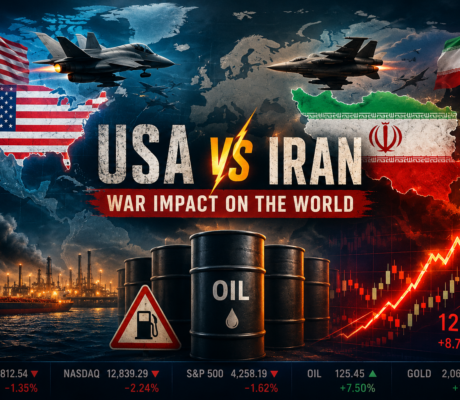
USA vs Iran War Impact on the World – Economy, Oil Prices & Global Security
Explore the possible impact of a USA vs Iran war on the global economy, oil prices, international security, and world politics. Learn how rising tensions could affect everyday life worldwide.
USA vs Iran War: How a Major Conflict Could Change the World
Tensions between the United States and Iran have remained one of the biggest geopolitical concerns in recent years. Military threats, sanctions, attacks in the Middle East, and disputes over nuclear programs have repeatedly pushed both nations close to direct confrontation. Recent reports suggest that clashes around the Strait of Hormuz and growing military activity are again raising fears of a larger conflict.
If a full-scale war were to break out between the USA and Iran, the impact would not remain limited to the Middle East. It could affect global oil prices, international trade, stock markets, food supply chains, and even political alliances around the world.
Why Is the USA and Iran Conflict Important?
The conflict is important because Iran sits in a strategically critical region that controls major oil shipping routes. Nearly one-fifth of the world’s oil supply passes through the Strait of Hormuz, making the region vital for global energy markets.
Any military escalation could disrupt oil transport, causing crude oil prices to surge worldwide. Analysts have warned that prolonged instability could create a global economic shock similar to past oil crises.
Impact on the Global Economy
1. Rising Oil Prices
One of the immediate consequences of war would be higher oil prices. Markets react quickly to uncertainty in the Middle East because many countries depend heavily on oil imports.
Reports already show fuel prices rising sharply during periods of tension. Jet fuel, gasoline, and diesel prices have seen major increases during recent regional conflicts.
Countries like India, China, and many European nations could face higher transportation and manufacturing costs.
2. Inflation and Higher Living Costs
When oil becomes expensive, transportation costs rise. This affects food delivery, airline tickets, electricity generation, and product manufacturing. As a result, inflation increases globally.
Consumers may notice:
- Higher petrol and diesel prices
- Increased grocery costs
- Expensive flight tickets
- Rising electricity bills
Economists warn that a prolonged war could trigger stagflation — slow economic growth combined with high inflation.
3. Stock Market Volatility
Global stock markets usually react negatively during wars. Investors move money from risky assets into safer investments like gold and government bonds.
Technology, tourism, and aviation sectors could suffer losses, while oil and defense companies might benefit temporarily.
Community discussions on investment forums also show growing fears about portfolio losses and market instability during escalating tensions.
Impact on Global Security
A direct war could pull multiple countries into the conflict. Iran has regional allies and strategic partnerships in the Middle East, while the USA has military bases and allies across the region.
Security experts believe the conflict could:
- Increase cyberattacks worldwide
- Trigger refugee crises
- Disrupt international shipping routes
- Increase terrorism risks
- Create instability in global trade networks
Analysts describe the situation as a “global polycrisis,” where economic, political, and humanitarian problems combine together.
Could This Lead to World War?
While experts do not currently predict a full world war, they warn that miscalculations between nations can quickly escalate. The biggest concern is accidental escalation involving other global powers.
Countries such as Russia and China may also respond strategically depending on how the conflict develops.
Most global leaders continue to push for diplomacy to avoid large-scale destruction and economic collapse.
How Could India Be Affected?
For India, the impact could be significant because the country imports a large amount of crude oil from the Middle East.
Possible effects include:
- Higher fuel prices
- Inflation in food and transport
- Pressure on the Indian rupee
- Increased import costs
- Stock market fluctuations
Indian businesses relying on exports and imports may also face supply chain disruptions.
The Importance of Diplomacy
History has shown that wars often create long-term economic and humanitarian damage. Diplomatic negotiations remain the best solution to prevent instability and protect global economic growth.
International organizations and global powers continue encouraging peaceful discussions to avoid further escalation.
Conclusion
The possibility of a USA vs Iran war remains one of the world’s most serious geopolitical concerns. Beyond military consequences, such a conflict could impact oil prices, inflation, trade, stock markets, and international security on a massive scale.
For ordinary people, the effects may appear through rising living costs, market uncertainty, and economic instability. This is why world leaders and financial markets closely monitor every development between the two nations.
As tensions continue, diplomacy and international cooperation will play a crucial role in maintaining global stability.
Frequently Asked Questions (Q&A)
Q1. Why are the USA and Iran in conflict?
The conflict mainly involves political tensions, sanctions, regional influence, and Iran’s nuclear program.
Q2. How would a USA-Iran war affect oil prices?
Oil prices could rise sharply because the Middle East controls major global oil supply routes.
Q3. Could the conflict affect India?
Yes. India may face higher fuel prices, inflation, and market volatility due to increased oil costs.
Q4. Would global markets crash during a war?
Markets may experience heavy volatility, especially in sectors like aviation, tourism, and technology.
Q5. Can diplomacy stop the conflict?
Yes. Diplomatic talks and international pressure remain the best ways to avoid escalation.